Skip to content

TETHER

What if the future you fear is the one you create?

Science-fiction drama / mystery · Feature film · Near future (c. 2035)

Scroll
SECTION 00

Trailer

Produced with no live-action photography · SeeThe Build

SECTION 01

The Premise

Eldridge, Pacific Northwest, the near future. For generations the town has lived by its aluminium smelter — until an AI-designed alloy renders the industry obsolete overnight. The smelter closes, its owner vanishes with the workers’ pensions, and shift foreman Rus Walker starts asking questions.

Leaving a workers’ meeting one night, he is struck by a hit-and-run driver beneath a new LumenArc tower whose camera has no footage. He falls into a coma — and while he sleeps, against every expectation, his town comes back to life.

He wakes into a town he doesn’t recognise. LumenArc has bought the smelter as the first hub of its Quantum Temporal Network and rebuilt Eldridge around it: universal basic income, retraining, a Future Academy where his daughter Ari thrives. His wife Laura has taken LumenArc work to cover his medical bills.

Rus is paraplegic. And a traumatic brain injury has begun producing terrifying distortions of time — vivid, involuntary flashes that feel witnessed rather than imagined.

Everyone calls them symptoms.

Rus starts to wonder.

SECTION 02

Eldridge

A company town in the Pacific Northwest: wet roads, dark timber, low cloud, industrial yards — the working-class texture of Aberdeen, Washington.

For generations the aluminium smelter has been the town’s history, set its hierarchy and supplied its mythology. Then an AI-designed alloy makes traditional aluminium obsolete almost overnight, and the technological revolution arrives in Eldridge as a redundancy notice rather than a robot or a spaceship.

Into the aftermath comes LumenArc, which calls itself a human possibility company and works across AI, robotics, medicine and quantum computing. It buys the dead smelter and converts its immense electrical infrastructure into the first hub of the Quantum Temporal Network. Around that hub it builds a new social contract: universal basic income, retraining, expanded medical care, community investment, and the Future Academy.

The change is ordinary at first. Eldridge does not become a gleaming metropolis: the brick buildings stay, the Logger’s Retreat still serves beer, pickups still sit outside houses built generations ago. Threaded through it are autonomous patrol robots, biometric payment, assistive medicine, quantum infrastructure.

Then Eldridge starts to thrive. Vacant lots become community gardens, the diner refills, a yoga studio opens in the old union office, and a man who spent thirty years pouring aluminium teaches sourdough classes and is visibly happier for it. The loss is real, but people don’t stop working. They start choosing what to work on.

Rus walks the same streets and feels a quiet unease: a contentment that seems rehearsed. The healthier Eldridge gets, the worse it looks to him.

The world is 90% familiar, 10% different.
SECTION 03

The Characters

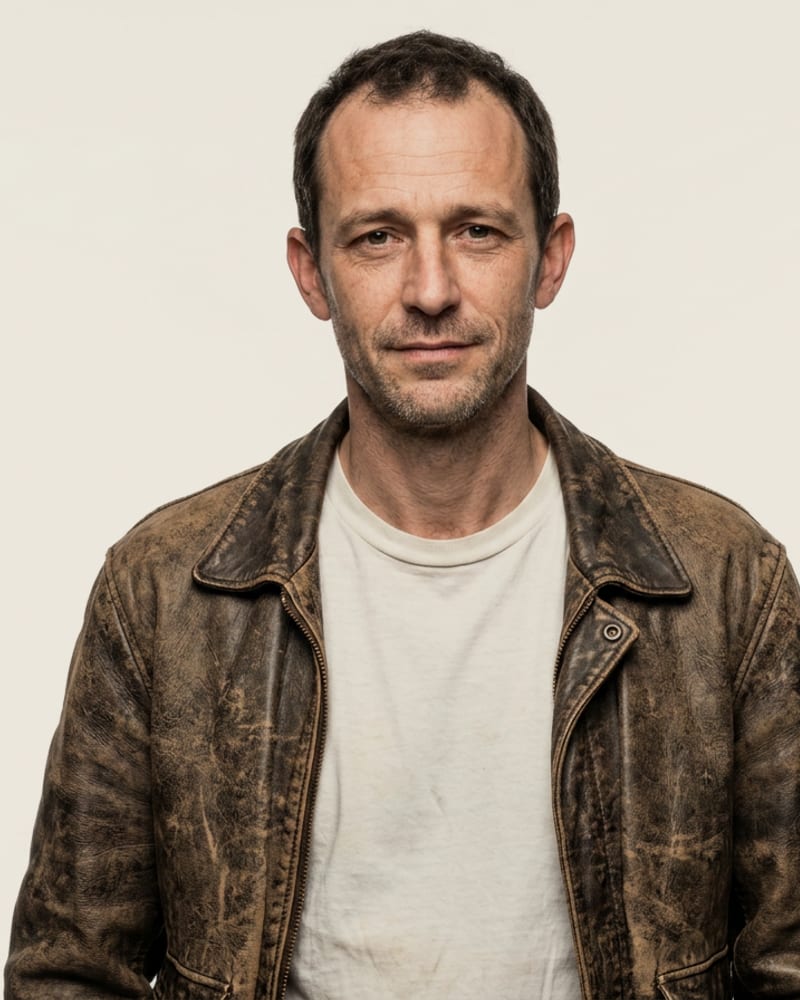
FIG. 01Shift foreman
Rus Walker — Shift foreman

Rus Walker(48)

A respected shift foreman: practical, technically gifted, stubborn, the man everyone calls when something breaks. He is persistent, sceptical, and instinctively suspicious of explanations that don’t add up. When his industry collapses, his employer disappears and a hit-and-run leaves him paralysed, those instincts turn him into an investigator. Rus cannot leave an unanswered question alone, and Eldridge is suddenly full of them.

FIG. 02Rus’s daughter
Ari Walker — Rus’s daughter

Ari Walker(16)

A robot-boxing competitor who inherited her father’s hands. The upheaval that breaks him reaches her as pure opportunity. Where he faces an impossible choice — accept a corporation’s implant or reject technology entirely — she embodies the film’s third option: build it yourself. Her arc runs from her father’s apprentice to an engineer in her own right.

FIG. 03Rus’s wife
Laura Walker — Rus’s wife

Laura Walker(45)

The person holding the family together. She takes a job with LumenArc while he is in the coma because his medical bills demand it, turns out to be good at it, and is valued for the first time. She finds purpose there and begins to thrive at exactly the moment Rus feels his own place disappearing. Laura loves her husband. She does not see what he sees.

FIG. 04Rus’s oldest friend
Liam Keegan — Rus’s oldest friend

Liam Keegan

Quiet, loyal, dryly funny — one of the few people Rus still trusts completely. Eldridge finds its feet; Liam doesn’t. His drinking gets worse: earlier drinks, missed days, jokes that land wrong. Everyone assumes it is the smelter and the life that went with it.

FIG. 05LumenArc founder
Adrian Lenon — LumenArc founder

Adrian Lenon

LumenArc’s founder and public face — and not the villain the genre trains us to expect. He is a true believer, and the good he does is real: his UBI feeds real families, and his Future Academy changes Ari’s life in ways nothing in old Eldridge could have.

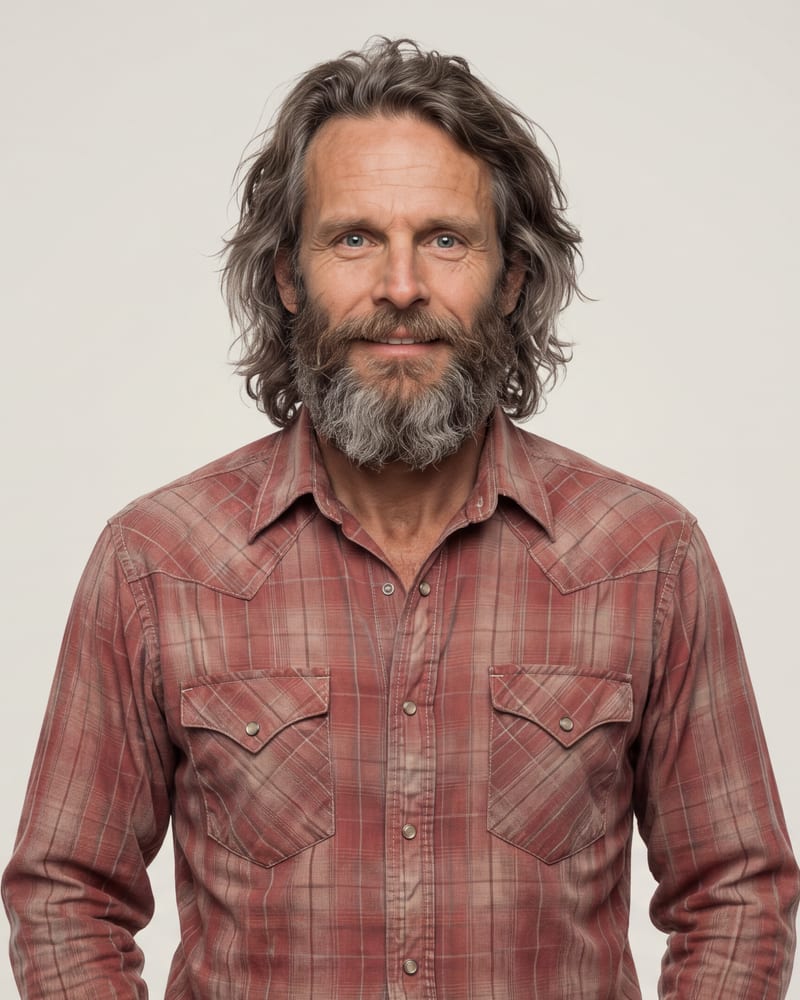
FIG. 06Off-grid conspiracy theorist
Marty Reynolds — Off-grid conspiracy theorist

Marty Reynolds(55)

Rus’s old friend and Eldridge’s resident theorist. Well-read, technically literate, never a fool in a tinfoil hat. His gift is finding the one genuinely disturbing fact inside a sprawling theory. His flaw is pattern hunger: he cannot leave two facts unconnected.

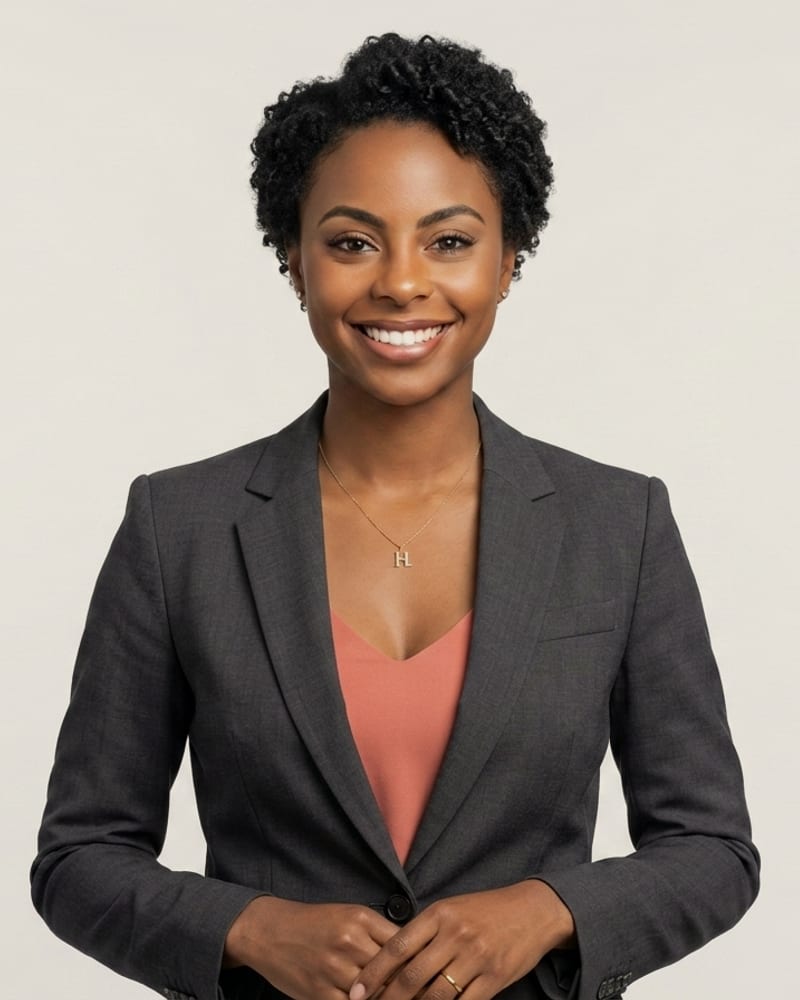
FIG. 07Lawyer
Megan Sanders — Lawyer

Megan Sanders(Late 30s)

A lawyer who has spent years untangling collapsed industries and looted pensions, and the story’s model of healthy scepticism. She distrusts institutions and still refuses to claim more than the evidence supports.

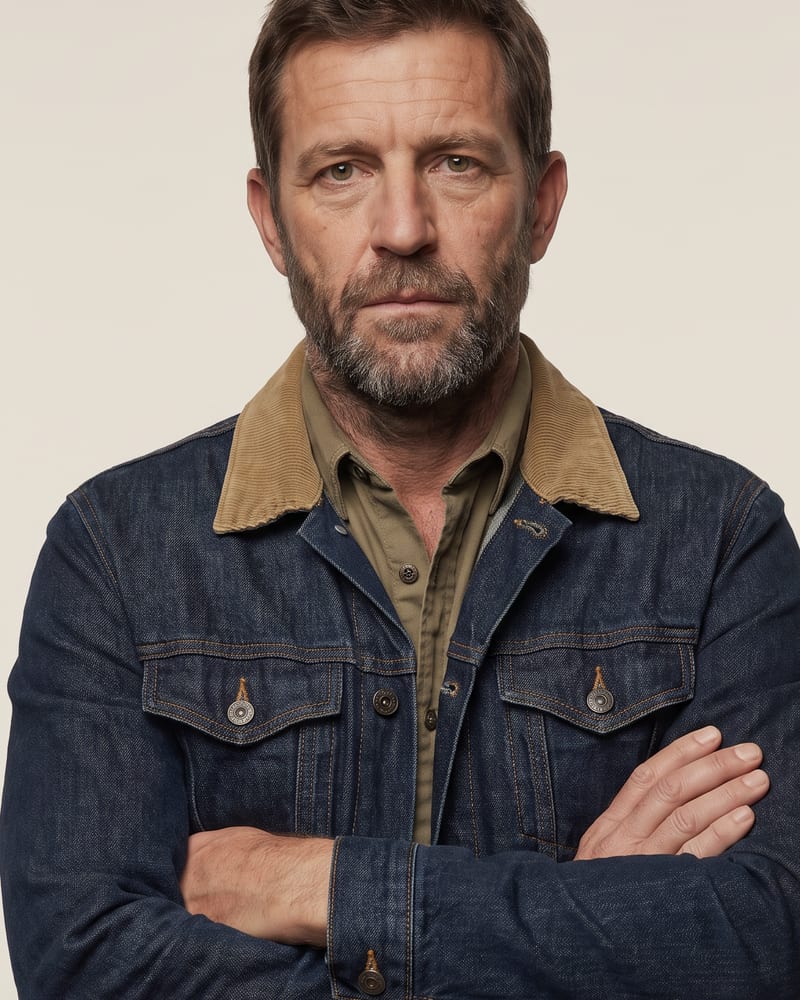
FIG. 08Investigating officer
Sheriff Harding — Investigating officer

Sheriff Harding(60)

The methodical lawman working the hit-and-run. Careful, discreet, withholding — he behaves exactly like a man in a conspiracy thriller, and is in fact just a good investigator.
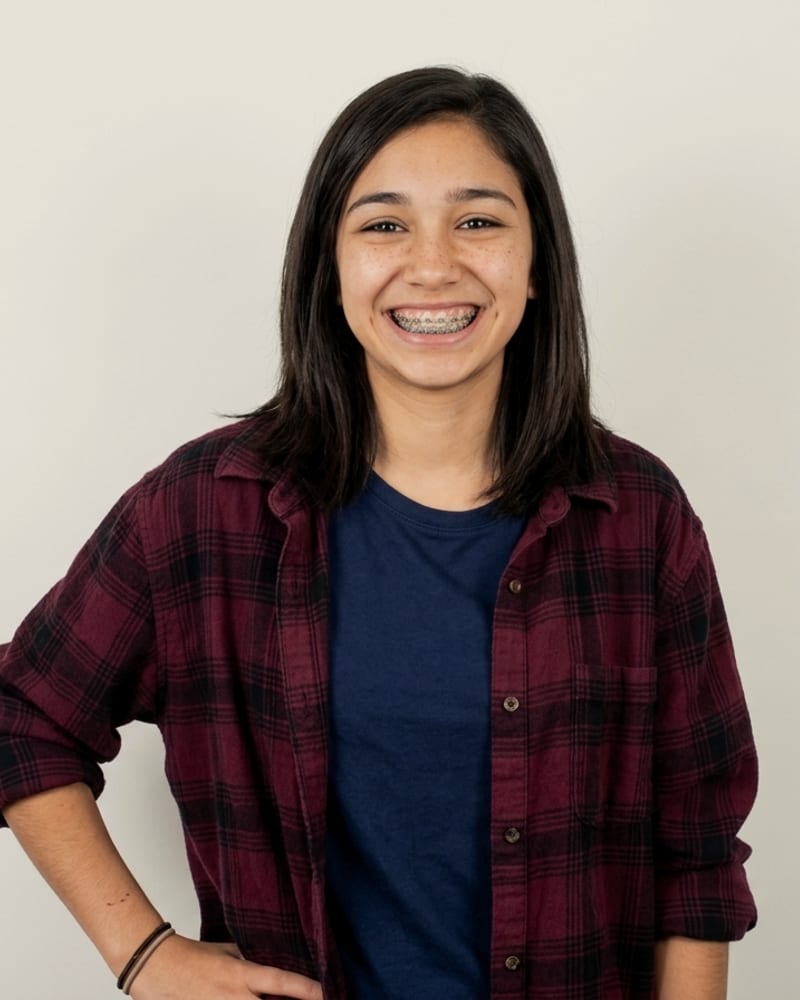
SECTION 04

Tone & Visual Style

Rust Belt noir texture, speculative-fiction ideas, and an unreliable point of view that turns an external conspiracy into an internal reckoning. The camera stays subjective with Rus long enough for the audience to build the pattern alongside him.

The design language is retro-future: today’s cutting edge aged into tomorrow’s ordinary. Plaid and denim beside biometric bracelets. A patrol robot with a scuffed chassis and a municipal decal. Quantum hardware humming inside a building where men poured metal for sixty years.

Nothing gleams for its own sake, and nearly all of it is shootable.
SECTION 05

The Quantum Temporal Network

Instead of isolated quantum computers, LumenArc is linking quantum processors across enormous distances into one computational system spanning hundreds of nodes — able to take on problems conventional computing cannot: climate and energy modelling, materials and drug discovery, resource coordination at civilisational scale.

What it promises is the intelligent management of scarcity itself, rather than raw speed. It is also why LumenArc calls this an Age of Decision. Quantum computing threatens the encryption that banking, identity and government sit on, so the infrastructure of the information age has to be rebuilt either way. The only question is who rebuilds it, and on what terms.

QTN News — network expansion, 500 nodes by October
SECTION 06

Built without a camera

The existing TETHER trailer was made with no live-action photography.

Drawing on our professional film and television set-design background, we designed Eldridge’s geography, locations, characters and technology, then built the trailer through 3D modelling, Unreal Engine, generative AI tools and conventional post-production.

For the feature we would build the film virtually first — performances blocked, environments designed, lenses tested, potentially a provisional edit before principal photography. Decisions made at that stage cost a fraction of the same decisions made on the day.

How we made it →
Pipeline
  • Unreal Engine
  • 3D modelling
  • ComfyUI
  • Seedance
  • Nano Banana
  • Higgsfield
  • Suno
  • DaVinci Resolve
The production method is itself a proof of concept.
For industry

Read the treatment

The full treatment, cover sheet and supporting materials are available to producers, financiers and representatives on request.

Request Access →